Category: Social Insecurity (Page 1 of 5)

Hawick: A Case Study in Capital, Money, and Decline

Hawick provides a clear case study of how a small industrial town once integrated into Britain’s productive and financial system — and what remains after that integration dissolves.

This was not a peripheral settlement. Hawick was deliberately built and connected because it produced. Its Georgian and Victorian architecture reflects capital deployed with confidence: mills, commercial streets, banks, clubs, and river infrastructure designed to serve output rather than appearance.

The town’s economic logic remains visible. Even after industrial contraction, the structure of production, finance, and circulation can still be read in stone and layout.

Hawick was once a mainline railway stop, linking Scotland through England to London. Such connectivity followed volume and output, not policy ambition. The railway’s removal was not the cause of decline but confirmation of it. As production diminished and capital withdrew, infrastructure followed.

Infrastructure does not fail first. It responds to capital flow.


Scottish Banknotes and Residual Issuing Power
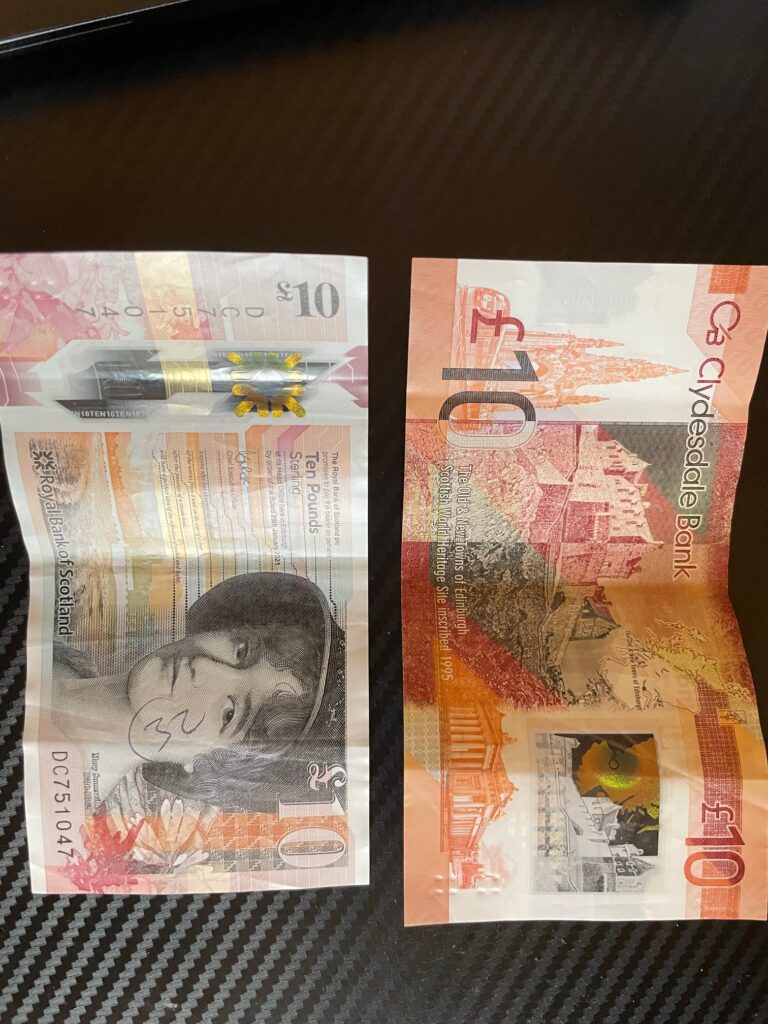
Scotland remains one of the few developed economies where private commercial banks issue circulating currency.

These notes are denominated in sterling and fully backed by Bank of England reserves, but the issuing authority remains with individual banks. This is a surviving feature of an earlier monetary system in which money issuance was tied to trade-embedded institutions rather than centralised state monopoly.

The arrangement reflects a period when money followed reputation, settlement discipline, and local credibility. The notes are not symbolic. They are operational remnants of a decentralised monetary structure.


Savings Banks and Capital Preservation
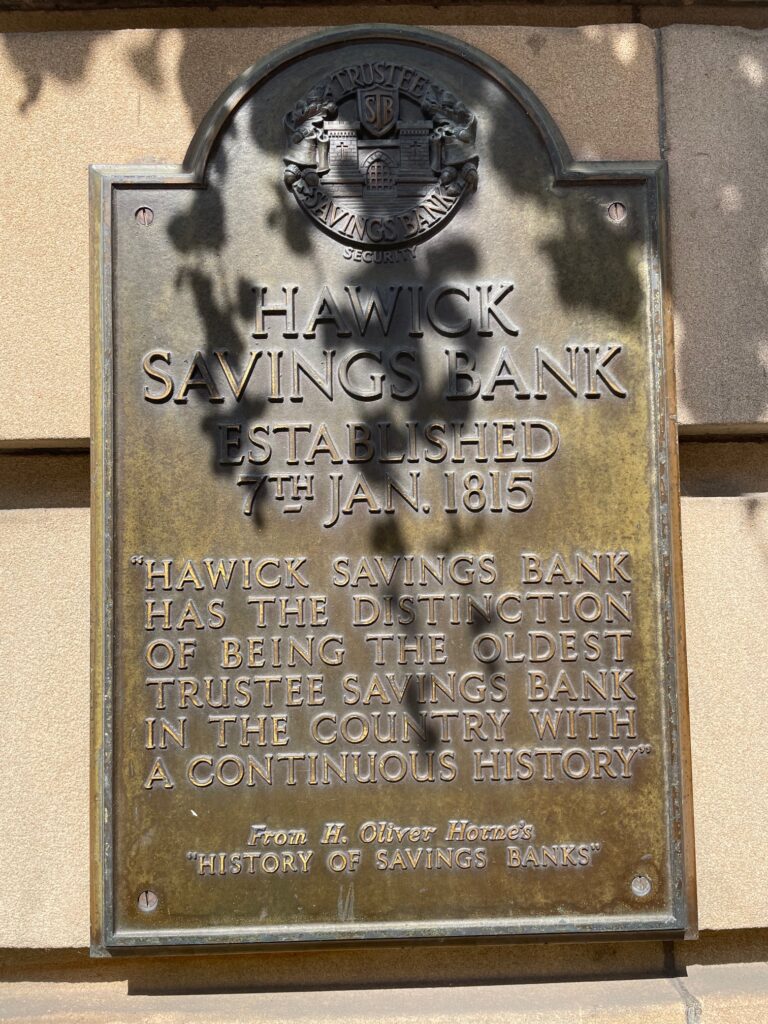
Founded in 1815, Hawick Savings Bank was a trustee savings bank, not a growth institution.

Its purpose was capital preservation, not expansion. In towns with cyclical income and narrow margins, security mattered more than yield. Savings banks formalised thrift, deferred consumption, and custodial trust.

The language carved into stone — trustee, security, continuity — reflects a financial culture focused on endurance rather than leverage.

Production created surplus. Surplus required safekeeping. Safekeeping required trust.


Physical Cash and Risk Management
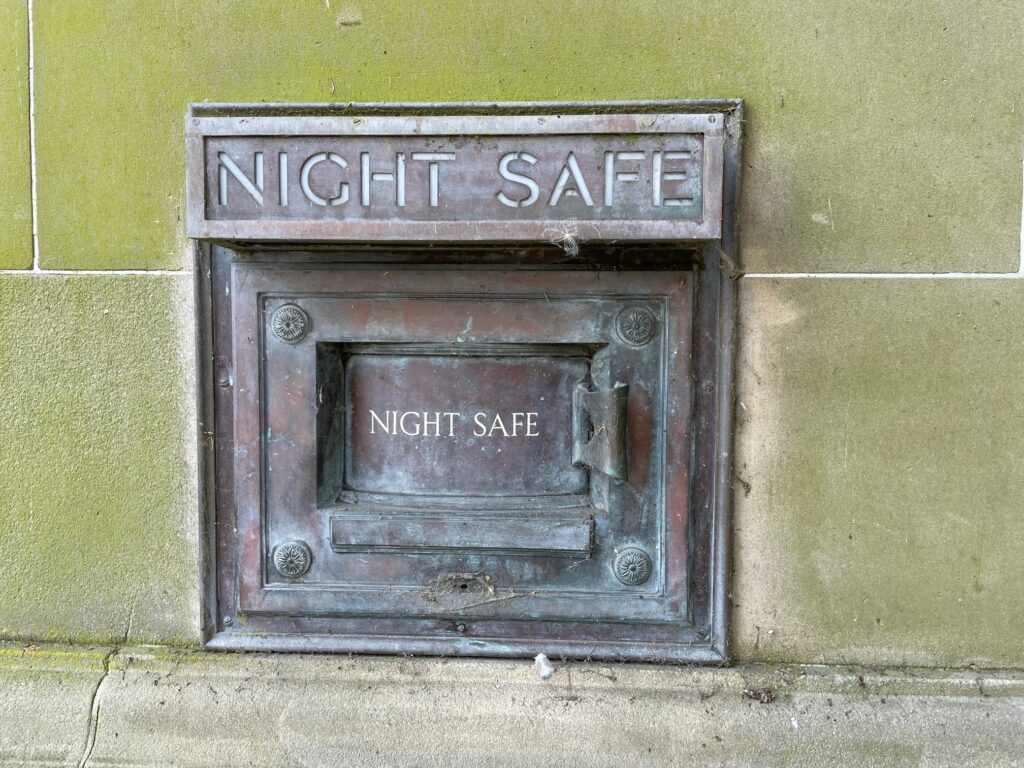
The night safe illustrates how money once moved.

Before electronic settlement, cash accumulation was a daily operational risk. Businesses deposited takings after hours. Banks collected later. Risk was managed mechanically.

Design prioritised security over convenience. Money was earned, counted, deposited, and reconciled. Responsibility was explicit.


Automation and Declining Permanence
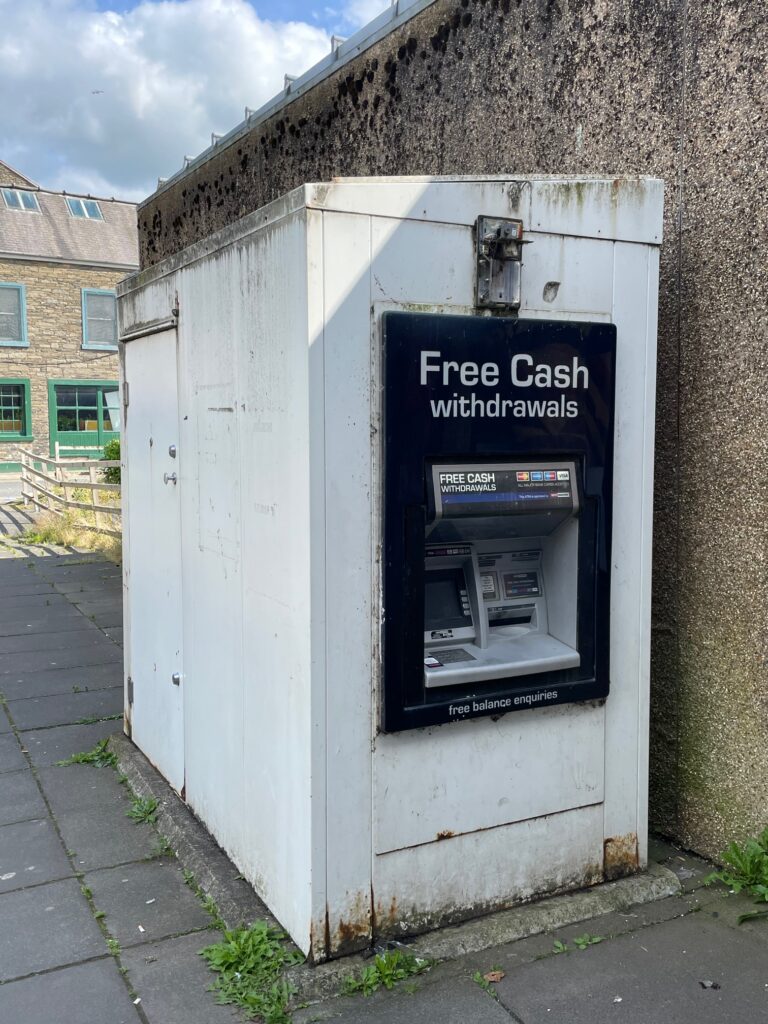
The ATM hut reflects a later phase: access replacing custody.

Banking shifted from deposit to withdrawal, from relationship to convenience, from institutions to machines. This infrastructure expanded rapidly — and is now quietly retreating.

The hut remains not because it is valued, but because removal costs exceed benefit. It was never designed for permanence.


From Local Production to Imperial Circulation
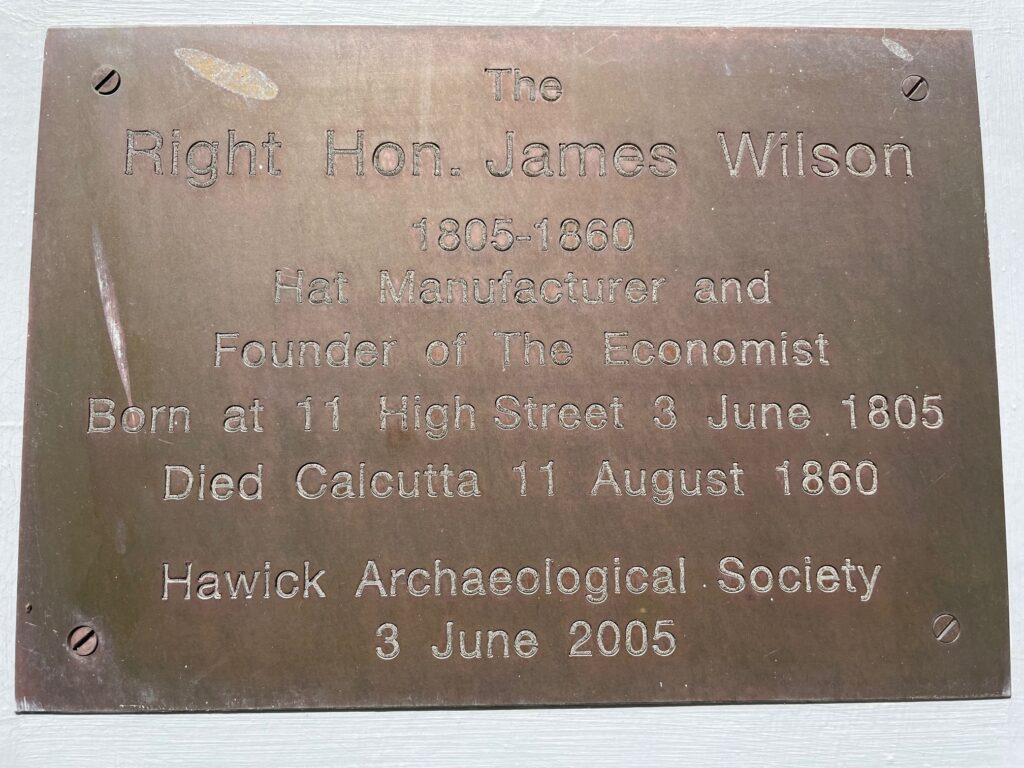
James Wilson, born in Hawick and later active in Calcutta, exemplifies nineteenth-century British economic expansion.

Manufacturing surplus drove wider markets. Those markets required stable currency, predictable rules, and financial commentary. Calcutta was a financial hub of imperial trade.

Hawick was not peripheral to empire. It contributed to it.


Clubs as Economic Infrastructure

Former Conservative Club – now a Wetherspoons

Political and commercial clubs functioned as working institutions. Trade, shipping, currency, and risk were discussed practically.

Empire was not ideological. It was operational.


Border Economies and Mobility
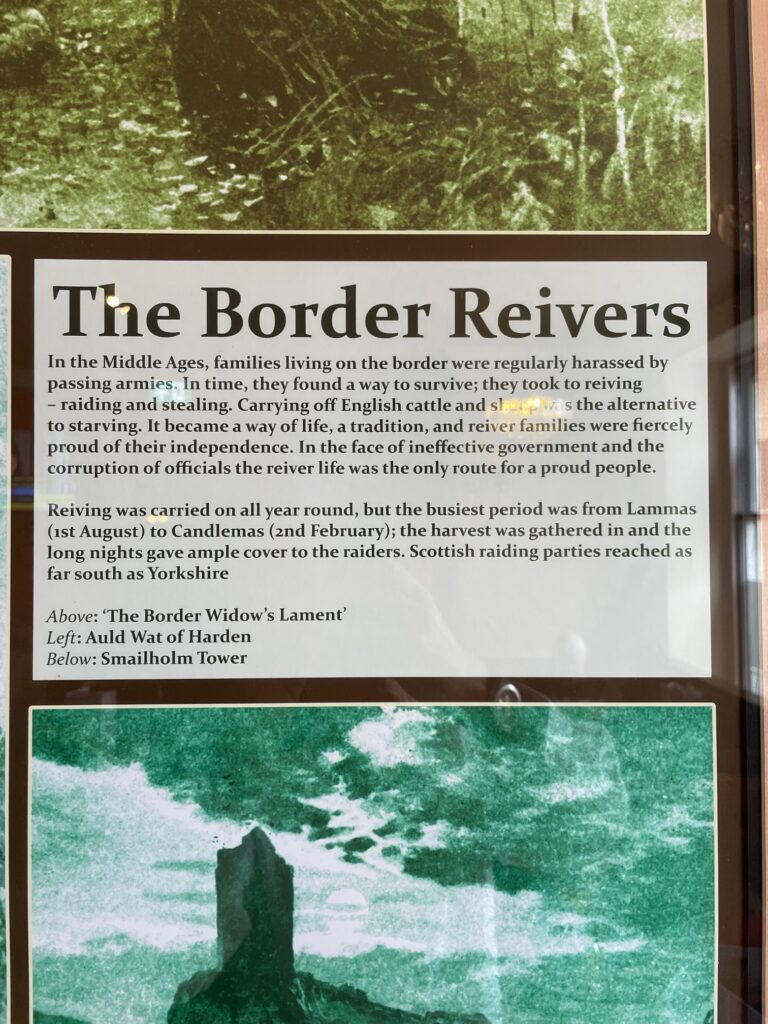
The Borders were historically unstable economic zones. Authority was weak, agriculture marginal, and mobility essential.

The Border Reivers were an adaptive response to pressure. When systems failed to sustain life, people reorganised or moved.

This pattern recurs across economic history.


Population Loss as Signal

Hawick’s population decline was gradual but decisive. Over time, opportunity narrowed relative to other locations.

This was economic sorting. People leave when reward structures weaken. The process is incremental and quiet.

Depopulation follows capital out.


Closing

Hawick demonstrates a basic relationship modern planning often misreads.

Money once followed production. Savings followed discipline. Movement followed pressure. When those links weakened, adaptation followed.

There is periodic discussion of restoring a rail link to Edinburgh. Such a connection would likely bring commuters and property demand. It would not restore locally anchored production.

A commuter economy changes function, not purpose.

The buildings remain.
The systems do not.
What survives is evidence.


Epilogue: Hard Money and Capital Anchors

Hawick’s most successful period coincided with a hard-money regime.

Under hard money, capital allocation was constrained. Credit followed production because it had to. Expansion required output, settlement discipline, and balance. Towns that produced attracted capital. Towns that did not, did not grow.

Hawick met those conditions. Manufacturing anchored trade. Savings accumulated slowly. Banking focused on custody rather than promotion.

The shift to soft money changed the equation.

Once currency became elastic and credit centralised, capital no longer required local production to justify movement. Scale, abstraction, and financial gravity replaced output as the primary attractors. Small industrial towns were not dismantled; they were bypassed.

Infrastructure withdrawal, banking contraction, and population loss followed.

Hard money rewarded Hawick because it produced.
Soft money ignored it because it no longer needed to.

That distinction matters.

As monetary systems again strain under debt, expansion, and declining trust, interest in tangible anchors inevitably returns: production, commodities, settlement reality.

Hawick does not offer a model to recreate.
It offers a reference point for what worked — and under what monetary conditions.

Hard money enforced reality.
Soft money suspended it.

The outcome is visible.

The State as Demon — and Why It Is Always of the People

It is tempting to describe the modern state as evil, predatory, or malicious.
That framing is emotionally satisfying — and analytically weak.

A more accurate description is this:

The state is demonic by function, not by intent.

A demon, in the classical sense, is not a creature with hatred or love. It is a non-human entity that feeds on energy, attention, fear, obedience, and ritual. It grows when invoked, weakens when ignored, and punishes those who attempt to leave its domain.

Modern states behave in exactly this way.

They do not love.
They do not forgive.
They do not remember sacrifice.
They do not respond to truth.

They respond only to inputs.

Once this is understood, the emotional confusion dissolves. The state is not bad in the human sense — it is structurally inhuman.


Denmark: The Cleanest Expression of the Model

Denmark matters because it is not extreme.

It is stable. Orderly. High-trust. Digitised. Efficient.
It represents the idealised endpoint of the contemporary Western project.

And that is precisely why it reveals the underlying mechanics so clearly.

In Denmark, the state has achieved:

  • near-total digital legibility
  • moralised redistribution
  • procedural compassion
  • low tolerance for exit
  • symbolic replacement of traditional authority

This is not tyranny.
It is consensus crystallised into code.


Skattefar and the Abstraction of Fatherhood

Denmark’s most revealing concept is linguistic:

SkattefarTax Father.

Skattefar is a symbolic father.
He provides without presence, authority without relationship, care without obligation.

He can:

  • collect
  • redistribute
  • compel
  • audit
  • punish

He cannot:

  • sit with you at 3am when life collapses
  • quietly fix something at 11pm so it works the next morning
  • absorb emotional chaos without paperwork
  • take responsibility without leverage
  • love without enforcement

Skattefar does not carry.
He processes.

This distinction is not sentimental — it is structural. Real provision is relational, asymmetric, and often invisible. Systems cannot perform it, only simulate it.


borger.dk: How Emotion Becomes Enforcement

The genius — and danger — of the modern welfare state lies in translation.

Through interfaces such as borger.dk, Denmark converts:

  • emotional distress → procedural claim
  • procedural claim → moral legitimacy
  • moral legitimacy → enforced transfer

At no point does anyone need malicious intent.
At no point does anyone need to lie.

The system simply routes pressure to the cheapest available counterparty.

Very often, that counterparty is not the state.

It is a man.


When Skattefar Appears Generous

The welfare state is widely perceived as benevolent because it dispenses resources.

But Skattefar rarely generates those resources.

He reallocates them — often from real far: the biological, relational, economically productive father — through compulsory transfers, maintenance regimes, and moralised redistribution.

The sleight of hand is elegant:

  • the state claims moral credit
  • the man provides the capital
  • the recipient experiences “support”
  • the architecture remains unquestioned

Provision is outsourced.
Authority is retained.


Why Men Are Sidelined — but Never Released

In Denmark’s model society:

  • men are rhetorically unnecessary
  • structurally replaceable
  • emotionally non-essential

Yet they remain:

  • economically critical
  • legally enforceable
  • fiscally visible

This is not a contradiction.
It is the equilibrium.

The modern welfare state cannot fully replace men — but it can displace them from authority while retaining access to their output.


The Cost of Abstracting Responsibility

When care is proceduralised:

  • responsibility becomes enforceable but not reciprocal
  • support becomes rights-based rather than relational
  • failure becomes administrative rather than human

This produces not resilience, but fragility masked as security.

Because when systems fail — and they always do — they fail procedurally, not personally.

Skattefar will not sit with you when the rules stop working.


Why the State Is a Demon — and Why It Is of the People

Calling the state demonic is not moral condemnation.
It is functional description.

But demons are not born.
They are summoned.

A population that is fearful, risk-averse, conflict-avoidant, and responsibility-shifting will inevitably generate a system that promises safety in exchange for visibility, obedience, and dependence.

Denmark did not become Denmark by accident.

It became Denmark because that is what the median Dane psychologically prefers.

The state is not imposed on the people.
It condenses out of them.


Why Walking Away Beats Fighting

The critical mistake men make is believing systems like this can be argued with, rebalanced, or morally corrected.

They cannot.

These systems do not respond to truth, endurance, or sacrifice — only to incentives and exits. Fighting supplies energy, legitimacy, and additional surface area for enforcement. Walking away withdraws the very inputs the system depends on: proximity, compliance, and extractable output.

Distance collapses leverage.
Silence starves escalation.

Exit is not rebellion.
It is realism.

Men do not need to overthrow Skattefar.
They simply need to stop confusing him with a father — and build lives that no longer require his permission.


Further Reading: Nomadic Sovereign

This analysis sits within a broader philosophy of quiet exit — reducing exposure to systems that require dependence while offering diminishing returns.

Nomadic Sovereign explores:

  • mobility over entrenchment
  • sovereignty over permission
  • exit over reform
  • optionality over optimisation

It is not about rebellion or ideology.
It is about seeing systems clearly — and stepping aside from them without drama.

👉 https://nomadicsovereign.com

The Four Horsemen of the Apocalypse

It completely missed my attention, and would have remained so had I not reinstalled Instagram on my mobile (#BlueTweedJacket), that the seals are now opened and the four horsemen of the apocalypse have, quite possibly, been released. Bear with me.

It all leads back to a very strange story that occurred on 24/04/2024 in the City of London, when 4 military horses were seemingly startled by some kind of building noise in Belgravia (Gematria : “Rise of the Phoenix”, remember this Economist cover from 1988?

“behold, a pale horse and his name that sat upon him was death..”

You can read about the horses here and work out the imagery for yourself. The key part for me is how the four horses ran through the City of London, much to the amazement of onlookers. Thus it was announced. I wonder if the names Vida, Trojan, Quaker and Tennyson could be signs in some way too?

For the uninitiated, the City of London is a separate country within the UK, explaining the bizarre yearly ceremony where the Monarch has to ask permission from the Lord Mayor of London to enter the City of London. I am unsure if fakey Prince Charley has done it yet, perhaps the City would say no, knowing he’s not really King. Seemingly, anyway, this all happened as the result of magically generating the finance for royalty to win their wars and the power of the City grew, to the extent that Corporations inside the city have votes, like citizens do, not that are many left within the old Roman city walls. A population decline that began with a Great Fire, way back in 1666. Oh wait a sec, 24/04/2024 (2+4)(4+2)(2+4)…666 again? After clearing the lower-grade humans away from inside the city, it went on to gain prominence in controlling world finance and the world of corpus-rations, or dead entities. You could even argue it controls the USA through the Eurodollar market, allowing it to manage and use the world reserve currency for it’s own purposes, exactly as it did with the British Pound, prior to 1926.

I can see the pieces linking together, Winston Churchill, as Chancellor of the Exchequer back in 1926 unrelentingly demanded a strong pound after the inflationary costs of The Great War, causing a general strike and leaving many coal miners without income and starving (I sense my own ancestors suffered too), which thanks the Lords of Finance book, explains how this led to a trans-Atlantic trade of Gold flowing across to the USA after WW1 and ultimately left the USA atop the world in 1945. Compare that to the closely-comparable current flow of gold from Europe and North America to Asia, or the new Switzerland of the East, Singapore. Got to wonder why he did it, eh? Or maybe, got to wonder who he did it for.

Match that with “You will own nothing and be happy” mantra of the World Economic Forum. Many of us are meant to die, especially the unproductive ones (by their measurements, let’s just ignore that not everything that can be counted, counts) and those that survive are meant to have every part of their lives tracked and controlled. I’m not joking, Denmark already has 95% of the population signed up to a Digital ID that includes a contract clause for allowing the bank, local government, any government agency (think : the health dept says you didn´t get the latest booster of the COVID-25 vaccine) and anyone else to basically lock your ID. No paying for anything, no access to anything, no state healthcare, no car, no nothing. If you don’t believe me that it’s already weaponised, ask this guy here, who without yet being convicted of any crime took part in a trucker protest by lobbing some potatoes on the motorway and got locked out.

Now, what about the names of those horses? Well, the first one, it maps via Gematria to “Dollar Collapse”, then the next one is called Trojan. Aha, another clue perhaps? What is Gold still measured in, even today? The city people once thought was a myth, somehow managed to have a weight named after it, the Troy ounce, used to measure gold. The one solid money unit people have always known they can rely on when everything else falls apart. Any ideas on those two other names…? Well, Tennyson was a Victorian poet whose most famous poem line was “Theirs not to reason why, theirs but to do and die.“, about the Charge of The Light Brigade in the Crimean war, and I seem to recall something happening in Crimea right now again. Quaker, a religion or an Earthquake. It may become clearer later.

I think I see the financial future clearer now. When money dies, as it has just been anounced it will, then we all turn back to gold, even briefly as the one unit we can trust, then the system resets, just as it did in 1923 for Germany (and 1945-46, again, painfully) and how it always works out for every fiat currency that has ever existed, be it Pounds, Francs, Dollars, Livres, Pengo or Dollars. Those that don’t prepare at all, be it by holding gold, silver or even tinned food are destined to expire, or fight, in a Darwinian trial that the elite will enjoy watching unfold and are poised, ready to grab your assets on the cheap. Then they’ll offer you the solution to scarce expensive food, rationing implemented and managed via an app on your phone. Digital ID worldwide through the back door and their Central Bank Digital Currency (CBDC), with all the controls they wanted all along.

Jim Rogers Talks about Silver

After so much success with his gold views, I asked ChatGPT what Jim’s views on silver are and am very grateful to their information for us average investors…

Investing in silver, through the lens of an astute investor like Jim Rogers, is akin to navigating the uncharted waters of an economic adventure—fraught with volatility yet laden with opportunities for the discerning investor.

Silver as an Industrial and Precious Metal

“Silver is a hybrid, straddling the worlds of industry and investment,” Rogers might muse. He acknowledges silver’s dual role as both a precious metal and an industrial commodity, recognizing its diverse applications across various sectors, from electronics to solar panels. This industrial demand often shapes his views on its long-term value.

Supply and Demand Dynamics

Rogers keenly observes the supply-demand dynamics in the silver market. He might emphasize the growing demand for silver in emerging technologies, juxtaposed with the challenges in its production and supply. “Silver is a metal in the shadows of its golden sibling, yet indispensable in the modern world,” he’d likely comment, highlighting the potential scarcity in the face of rising demand.

Silver vs. Gold: A Comparative Perspective

Drawing parallels between silver and gold, Rogers might emphasize the volatility and potential upside of silver compared to its more illustrious counterpart. He acknowledges that silver tends to amplify the moves of gold, often outperforming it in bull markets but also bearing the brunt of downturns. “Silver is the wild cousin of gold,” he’d quip, alluding to its penchant for higher volatility.

The Role of Macro Trends

Rogers’ investment philosophy revolves around macroeconomic trends, and silver fits into this narrative. He might delve into the correlation between silver and broader economic trends, pointing out its sensitivity to inflation, currency devaluation, and geopolitical tensions. “Silver dances to the beat of macro rhythms,” he’d likely comment, underlining its responsiveness to global economic shifts.

Physical Silver vs. Silver Equities

Similar to his views on gold, Rogers might lean toward physical silver over investing in silver mining companies. He might express concerns about the operational risks, management decisions, and geopolitical uncertainties that mining companies face. “In silver, owning the metal is holding the ace,” he’d opine, emphasizing the tangible value of physical ownership.

A Long-Term Perspective

Jim Rogers’ investment horizon spans generations, and his views on silver echo this patience. He might advocate for holding silver as a long-term hedge against currency debasement and inflation, reiterating its role as a store of value through tumultuous economic cycles.

In essence, Jim Rogers’ take on silver investing reflects a nuanced understanding of its industrial significance, market volatility, and its potential as a hedge in a diversified investment portfolio. To him, silver isn’t just a metal; it’s a multifaceted asset poised to shine amid the complexities of global markets.

Jim is most reknowned for his 1970s Quantum fund management with George Soros and more lately, his move to Singapore. He seems to have a knack for knowing when to buy low and sell high and freely shares his insights via interviews and Books.

Abruptly, the sound ceased…

“Slowly, but surely, they drew their plans against us”

I am reminded in the moment of War of the Worlds, the HG Wells classic from 1897 and furthermore the Jeff Wayne musical, narrated by Richard Burton. For, after a year of relative quiet and no major events (All quiet on the Eastern front), the aliens building their machines on Horsel common are almost ready with the next phase, I sense.

2023 was a year of big gains and big losses for me – in every sphere of my life. Yet, I enjoyed it all. Sometimes the journey trumps arrival at the destination. Let us see what 2024 brings and face it with alacrity.

Oh, almost forgot to mention, Gold, Silver and Freedom, as relevant as ever, is now available in Germany.

War, What is it Good For?

Absolutely nothing. If you believe the song by Edwin Starr, anyway. I disagree. Eisenhower warned in the 1950s about the military industrial complex in the USA and sadly, time has proved him right, with a gigantic industry going on that relies on conflicts occurring in faraway places. All under the modern excuses of protecting democracy, while, it may be noted, most of the action seems to occur in resource-rich countries like Afghanistan, Iraq, and Libya, but countries like Zimbabwe are left to collapse.

Take for example, the latest situation in Ukraine. When it comes down to it, it’s a conflict based on what media tells us is happening. Unless we actually have our own feet on the ground, or know someone there who can tell us better, then it may as well all be lies, exactly the same as Orson Welles and his radio dramatisation of War of the Worlds in 1938, that had Americans packing their bags and fleeing for the hills. However that might have saved them is unclear, but I’m wishing I knew someone in Ukraine or Russia border regions who could tell me what the fear level really is.

Initially, stock markets responded by marking down Russian shares, and they have declined markedly, by about 30% since October last year, suggesting the insiders were in the know, as per usual. The USA continued to rise until a couple of weeks ago, since when it has fallen markedly too, along with EU markets. It’s interesting that the UK has not joined in the falls, and it could be that a market containing lots of resource, oil and financial stocks may be resilient in the coming years. Last couple days though, things have changed, with marked rises in Russian stocks especially, but the US beginning to curve upwards again too. The conclusion must be that the insiders know World War 3 isn’t happening quite yet and just perhaps the USA has had a little bit of a bloody nose from a playground scrap against a more established player. In fact, the USA has quietly slunk away, defeated from a few scraps in recent years. They tried to start a coup in Venezuela, the world’s richest nation in oil reserves and failed, suggesting the decline of this cycle of their power is well and truly underway.

So, what do we learn from all this? Wars happen and mostly they are engineered by someone looking to profit in some way. It wouldn’t surprise me if Ukraine agrees a major arms deal with the USA in coming months, to help defend against the Russian “threat” and the military industrial complex continues to profit from human misery and fear. As an outsider, with no hope of knowing when the next conflict incident is planned, My reading of this is : buy Russia, they really have it all, the resources and tons of under-used agricultural land that once supplied the world and just perhaps, buy the UK. People are still convinced Brexit was a bad idea, but the performance of UK stocks and funds suggests they have missed out on ten years of very good rises. Perhaps they missed that Royal Dutch Shell decided the EU is such a bad place to be, they dropped the Dutch after over 100 years and moved their head office to the UK in December 2021. It goes back to thinking before that resource stocks and banks may well be the right places to be for the next ten years. I am in no way saying that it’s going to be a great ten years for people living in the UK. “We are on a train journey, and some of the people on the train at the beginning are not going to be there at the end”, as I was once told by my employer during a meeting where mass redundancy was clearly planned. With coming rises in food prices, living in a country that must import over half it’s food and can easily be blockaded by uncooperative neighbours might not be a picnic. However, resource companies with their HQ there, but most of the earnings coming from elsewhere in the world, may well be a great place to be for your hard-earned savings. Along with…choke…big pharma. Reminds me of another war going on right under our noses that few are even aware of, the war on humanity itself.

When Money Changes

Global financial systems tend to last around fifty years, before dying and being replaced by something new. Normally in both a mix of managed and big bang, if that makes sense. Certainly, this is what happened in the late 1960s, leading to the USA closing the Gold window in 1971 and ending the convertibility of US Dollars to Gold at the fixed price of $35 an ounce. What a significant year 1971 was, for personal reasons too.

How Ironic he interrupted Bonanza to make an announcement about gold…

1980 was also significant, being the year it took $850 to exchange for one ounce of Gold. Yes, a twenty-times increase in nine years, for purchasing something and hiding it under the floorboards for the whole time. Sounds great, doesn’t it? And so it probably was, for those in the know, who had the opportunity to prepare early before the masses panic and pile in.

So, knowing that global financial systems change approximately every fifty years, we should be able to work out another monetary switch took place in 1921. This one wasn’t so clear, but it most certainly did.

Prior to world war one, the world largely operated on a gold standard, where prices were relatively fixed, or even falling with productivity improvements and living standards were rising. La Belle Epoque, as the French called it. A high point of human civilisation, that must have seemed at the time as if it would go on forever. Many in 1914 declared war too impossible to take place, as the world had become so intertwined and living standards had risen so high, only fools would want to destroy such a perfect world. Well, with the benefits of hindsight, perhaps not fools, but most definitely those with darker intentions and few scruples about the natural universal laws.

Naturally, wars are expensive, both in human and financial capital. Governments issued new bonds and demanded patriotism of their citizens, both in sacrificing their lives and investing their funds in pathetic investments that over the long term were guaranteed to dilute their purchasing power. Interestingly, when I first followed financial markets in the 1980s, £100 war loan bonds were still trading in the UK, but with a terrible yield of perhaps, 3% and trading for around £40. Imagine what £100 could buy in 1940, versus what it could buy in 1990. As usual, the deal with government is a one-sided one and in this respect, nothing has changed for the better in one hundred years, but got markedly worse. By 1918, all sides were experiencing inflation (definition : increasing number of currency units chasing same quantity of goods) for the first time in generations and as the war ended, there was a chance that if the economies of the nations returned to anything like pre-war normal and soldiers spent the dormant earnings of the past years, inflation could’ve occurred massively. Also, there was a big question around gold no longer being able to back the number of currency units now in existence. Over the coming years, gold coins were quietly withdrawn from general circulation and replaced with pieces of paper promising the same thing, but now buying much, much less when it came to exchanges. The wisest members of the public surely kept a few gold sovereigns, if they had them, in the drawer for a rainy day. How interesting then, that a serious pandemic – Spanish Flu – came along for and semi-shut down these economies, causing large-scale unemployment and distortions for around two years.

Let’s compare it to now. In 2008, a great financial war began. One where if the natural laws were followed, the banks would’ve collapsed. Instead, they were put on life support at multi-trillion cost to the citizens of those countries affected. The war quietly continued for 11 years, with various actors and players of roles appearing to assuage and distract the public in the style of master magicians, watch what this hand is doing, don’t look at the other hand. It’s largely worked, unfortunately and people have been tricked, while the banks have recapitalised, made billions and are now perhaps good long-term investments for the next ten years, while they unscrupulously build large property portfolios of repossessed properties to be rented back to the dispossessed. In September 2019, the financial world creaked when interest rates on the repo market (short term overnight lending between businesses) spiked and everyone stopped lending to each other. All in one night. It’s very hard to find details on this, since the media completely failed to report it at the time, but the US Federal reserve began pumping billions nightly in to keep that market functioning, before Corona conveniently appeared and shutdown the world, just as Spanish flu did one hundred years ago.

I make no judgement on whether these pandemics are real or not. Only their mirrored effects in creating similar situations in the world. On this basis, they have been near-identical, so now for a prediction – Spanish flu, the mostly appalling misnamed illness of all time, considering the first case was reported in a Kansas military camp, began in 1918 and swept across the world in two years, dying out around 1920. From there, there was economic hardship and a stock market collapse during the period 1921-23, along with gigantic hyperinflation in Germany, which I covered in my book. After that, famously, the stock markets began a dramatic rise, peaking in 1929 and not finding their nadir until 1932. Perhaps the idea of a rhyming, roaring twenties is not yet done? Let’s imagine this scenario – Corona came in 2020 and perhaps Moronic Omicron is the one that dampens it down and things reopen after two years. Then economies readjust over the next few years with a destruction of money in the old system, before the new system is established. One thing is for sure, unless you are an insider, and I am clearly not, we need to retain our wits about us to survive and, just perhaps, prosper. Good luck!

As an aside, it fascinates me that the war ended on 11/11/18. An interesting date in itself. One that cleverly works worldwide, regardless of how you arrange the days and months, a bit like 6/6/44, or 7/7/05 – feel free to look those up if you are requiring historical insight. Few know that the war began on 111118 too. Oh wait no, I hear you say, it began in August 1914, when Archduke Ferdinand was amateurly assasinated by Gavrilov Princip in Belgrade, an assassination attempt so botched the driver had to help it happen. No, it began on 111118, as that was the number plate of the car the Archduke was on. 118 and gematria, you really can’t make this stuff up. Wake up and see the signs.

2022 and Beyond

January 2022. Whoever thought they’d get here without being forced to take the medicine for cerveza sickness, as one finance channel on youtube calls it, to avoid the increasing censorship affecting anyone with a voice outside the official narrative.

Silence here does not mean that there’s been a failure to observe what is going on and where this is all headed. In December, my gestapo train moment came, where the conductor asked to see my papers and I was found wanting, a valid paid-for ticket was no longer enough to use public transport. He went off to call the police, but they never appeared and I sneaked off one stop early to avoid the possible confrontation. Zieg Heil.

Now everyone is well into this coronapas, it’s worth pointing out that the official vaccine manufacturers only promise is that you will not suffer [ coronavirus / covid-19 ] as badly. They DO NOT, yes, DO NOT, promise that it will lessen infection or transmission. A New England Health journal study has recently proven it and if you don’t trust me, you must trust the science of the good folks of Harvard and Yale, right? In fact, some studies even found that some vaccines increase transmission rates – no surprise to me, I often felt I could tell if people near me had just been done and were shedding their viral load on me. In other words, coronapas is worse than useless and gives a false trust. It is of course being pushed for another reason.

If I was to predict where this is likely to go next, and I will, after all this is my currently-uncensored outlet, then here we go…the official narrative is saying Omicron (anagram : moronic) is not as serious in hospitalisation and deaths. In other words, the virus is dying out. However, this was never about a virus, oh no, although the virus concept has been useful in controlling the public into accepting things they would never accept under normal circumstances. This was about the next financial system.

Think about this. Now, everyone, or almost everyone, has a tracking app on their mobile phone. People who never, ever bothered with smartphones before now have to own one to do once-mundane tasks such as visit the barbers or eat in a restaurant and, alongside this, the people themselves are magnetised beings on the internet of things, with every booster increasing their intake of graphene oxide now silting up inside their bodies. We are now incredibly close, if not already there, to that point where people can be tracked to the extent of their body activity. Exactly what patent WO2020060606A1 was about, a cybercurrency earnt by body activity. In this future monetary system, users will earn the credits direct to their coronapas wallet, granted by the omnipresent AI-god, who, being omnipresent can just as easily take away, or block usage of, if the users overindulge in eating meat, put out too much rubbish in the bin or claim to be working when their body activity suggests they sat still and browsed facebook. When that happens, you may regret your eagerness to download the coronapas a few years prior. If you still have a mind capable of regret, that is.

Naturally, millions will die. That’s the plan. It’s quite literally written in stone on the Georgia guidestones, that the world population should be under 500 million. You’ve seen how easy it was to get people into a panic with a virus that TV told them existed, even if their eyes when they went out did not. This next one, whenever it comes, perhaps the Marburg virus, created in a lab in one of the founding illuminati German cities, is planned to be the one where people see the bodies in the streets, blood pouring out of eyes, ebola-style. Or maybe it’ll be the remotely-triggered zombie apocalypse, in the style of Doctor Who or Kingsman. Whatever, people are planned to die.

And best of all, just like Nazi Germany, the people wanted it, they cheered for it and they jeered those who fought against it, ultimately in many cases cheering on their forced sterilisation or removal to the concentration camps. Until it was their turn, anyway. Good fortune.

A Rising Tide

Some men just want to watch the world burn.” – Alfred Pennyworth, The Dark Knight (Batman)

If I was to construct a plan with the final objective of watching the world burn, I wouldn’t know where to start, but some people clearly do. For, since March 2020, you couldn’t have introduced a better set of policies to achieve this and worse, the majority of people are going along with it without realising the final endgame and the consequences for them and their way of life.

The main thing that triggered this post has been the recent 50% increase in electricity prices here, followed by an email telling me the price of my wood pellets for heating was going up 10%, followed by another email one month later telling me that…the price is going up another 10% due to increasing raw materials, manufacturing and transport costs. You could not get a clearer message that survival is the future name of the game and soon it won’t be worth working, not at the current rates of pay, at least and time will be best spent fighting for the remaining toilet rolls on the supermarket shelves at any price. Welcome back to the 1970s, a time of shortages, conflicts, stagflation, stock market crashes and inflation. Unless things change, expect the same once more for a new generation, only greatly amplified due to globalisation and the loss of local self-reliance. I myself have clear memories of my mother making hotpot using the electric cooker in the allocated 4 hours of rationed electricity time, in the UK and sitting with candles on dark (k)nights. Oh how it was kind of fun as a child and besides, with a TV with only 2 or 3 channels to choose from and no internet, technology was not so missed as it would be today. Can you imagine the freaking out for many, if the mobile phone goes flat and it cannot be recharged?

So, let’s look at some of the ways the world is burning. Advance warning – in some cases, it really is, literally :-

Paying productive people to stay at home and do nothing, rather than contribute, or worse, paying them to do unproductive tasks like PCR testing (possibly, this is destructive, but let’s leave that for another day). All the while, increasing the taxation and debt burden on the shrinking productive sector. For yes, furlough still exists, paying people close to full salaries to stay at home and do nothing, while the better employees get paid the same and are required to actually go to work and carry the load of two people.

Telling businesses to not let in particular customers, or lock down completely and suffer the consequences. You’ve probably seen those consequences on your very own High street, where many businesses have closed down completely? Certainly, even if some did not go bust, many owners seem to have decided it’s a good time to retire. It would have been nice to see more businesses resist, like the hairdressers in Bradford who stayed open throughout and accumulated over £18,000 of illegally-issued fines, which recently got written off. Common Law and Maritime law are worthy of additional study, if we are to survive.

Ordering farmers to burn or destroy crops instead of allowing them to reach the free markets and reduce rising prices. Every food commodity is going up in price, just look at corn and beef, for example.

Emptying reservoirs at a key time. This one is a worldwide occurrence when you start looking, and has left many, such as California farmers, puzzled as to why their fields stand barren and unproductive while water is, quite literally, flushed down the drain.

After years of simply burning excess natural gas into the atmosphere, it’s become the new hot commodity. Perhaps next time someone tells you that you are responsible for the global warming con, you should picture this burning that’s been going on for years. Natural gas prices are now up over five times in just a few months. It could have been eased had the pipeline from Russia had been allowed into Western Europe, but again, interference with perhaps darker motives has played a part. Natural gas isn’t just used for heating homes and generating electricity, it is one of the main components of fertiliser production, so expect this to feed into higher food prices too.

Starving traditional energy production of finance – you must’ve heard the awful ESG stamp on some investing funds, promising not to invest in dirty businesses. Define dirty. I note the influential Blackrock in the USA made promises here. Here’s some financial musing – think of completely avoiding any fund with ESG compliance and buy funds that unashamedly invest in oil, coal and essential resources – the world needs them and will continue to do so for a long, long time. In fact, the IT sector knows this and the cynic within me wonders if the gigantic predicted increases in power consumption forecasted for the next 20-30 years are due to increased IT usage for the mega-servers of the internet of things. The secondary cynic also wonders how well those ESG funds will perform in the coming years, when it comes to the pensions of the masses. I bet the investment bank fees are good though and, for sure, when you collect your meagre pension they will console you by saying you invested to save the planet. Shame you’re starving to death because your pension has been stolen from you, but hey?

The U.K. quite cleverly introduced a new legal grade of petrol in September 2021, with twice as much ethanol in it as before. They also introduced a very clever temporary shortage to clear the garage tanks of the old petrol, so the new grade could be rolled out. Okay, perhaps my cynical brain is in full flow today, but it’s hard not to be with stories like this. How is the ethanol produced? From corn, of course, so this new petrol puts even more pressure on food prices. Worse still, some older cars may end up with damaged engines from this new petrol grade and be fit only for the scrapheap. While getting older cars off the road is often touted as being good for the environment, don’t forget the gigantic manufacturing and transportation costs, or the estimated 500,000 litres of clean water used for every car produced.

By now, you should be aware that you are under attack from all directions and you’re probably wondering what you can do to counter some of this. I have often placed stock upon Zigging while the World Zags. In a time where people are spending more and more time in the virtual, meta world, you could probably not do much better than go out into the woods and hug a tree. After all, when was the last time you experienced a real hug, one with energy and genuine love? I’m not joking either, I personally am making major steps to more frequently let the mobile phone go flat – at the very least it’d be interesting to see what happens if I do once the covid passport is mandatory. Yes, once. Do – talk to people (or trees), read books, write with a pen and paper, meditate and listen to the birds sing. Don’t – watch TV (there’s a reason it’s called TV programming), subscribe to Netflix, read newspapers or drive when you could walk. Feeding the machine with your energy cannot be a good thing. Of course, there are some things I cannot overcome yet, such as working in IT and writing this electronically, but there again, put your supposed carbon footprint into the context of those items above and realise it’s not your fault, or that of the neighbour you are being encouraged to hate.

As a final thought, in reverse Sumerian Gematria, Batman equates to 666…

Utopia

Utopia : an imaginary perfect world, where citizens live in perfect, perpetual harmony

or alternatively :-

Utopia : 2013 Channel 4 UK television series, about some internet conspiracy realists, who discover a secret plot to reduce the population of the world to 500 million, by the creation of a fake virus scare and the releasing of the cure.  A two-part vaccine designed to make the majority of the population infertile, bar a select few with certain genetic characteristics

Well, with an outrageous plotline like that, I am not surprised it sank into only being known and remembered by outliers of society, right?  I mean, honestly, how ridiculous to think that human beings would fall for something so ludicrous and far-fetched.  After all, this plot to kill 500 million people is just a bizarre conspiracy theory, yes?

Actually no, it’s quite literally written in stone.  In the state of Georgia, USA, you will find the Georgia Guidestones, along with ten new commandments for us all to follow.  Moses would be impressed, although the writing quality and clarity of the message has been somewhat lost compared to the literary sharpness of Thou shalt not Kill.  In fact, those ten commandments are not only clear but when you think about it, but most of them are variations of steal – transgressions against the life of your fellow man.  Quite simple to obey and easy to know yourself.  Your soul will tell you if you’re abiding by them or not.

Then what about the other parts of the story?   I won’t even try to explain, just watch this short trailer here and decide for yourself.

As an advance warning, there is quite a lot of violence in there, especially one scene early on that I had to completely skip.  I can see though, that it is probably necessary to show the extent dark forces will go to to achieve their goals, but I abhor TV violence.  I believe young minds find it hard to differentiate between TV and reality and this normalises it.  This desensitisation reminds me of a work incident once, where I was tricked into watching a man be gaffa-taped to a chair and choked with his own tie, his fellow employees all standing around mocking, all under the guise of him deserving it because he had visited a virus-infested website on the work computer.  They called it Mandatory Security Training and for some reason, everyone else watched it, thought this all to be normal and I find that rather worrying if so.  The complete disregard for the trauma they may cause on fellow employees by releasing this and calling it mandatory, disgusts me even now.  I also always find it interesting how the people promoting population reduction never see themselves as part of the problem they’ve identified.  This series is full of hidden references that would be completely missed had it been watched back in 2014.  Like the “good” health minister being manipulated out of his role and replaced by the vaccine champion with a hidden agenda, Tyrian purple, freemasonic symbology and not least, the pharmaceutical company producing the vaccine being called Corvadt. .  This kind of subtle wordplay is often present in television and film.  it’s also interesting that Channel 4 dropped the show after two series, but it got taken up by Amazon and I would guess redirected toward a safer route by Mr Bezos.  John Cusack is now the main star and, while he may be good at making himself a suitable beta male for alpha widows in Hollywood films by appearing to be a good soulful guy who sands boats, I don’t see him being good here for passing on the message of what the show was really originally about.

Watch it.

Consider the Georgia stones again.  Perhaps the main difference to absorb here is that whereas Moses dealt with commandments – simple laws of the universe that your soul itself will tell you when you are transgressing, the Georgia version deals with guides, mere suggestions on how to live life.  I hope no-one falls for them, but I fear they will, since the sinister aspects are well hidden behind vaguely-written sentences, that hint at promises of the perpetually perfect harmony we all believe we want.  We would know better if a full vaccine list had been released anywhere in the world for any brand, but it has not – only the active ones.  To put that in perspective, Utopia lays it out that the ingredients causing the infertility are inactive, but are delivered separately in each dose and it’s only when mixed that they become active.  Clever.  It’s almost as if someone wrote this seriously to warn us of something.  Indeed, someone (I forget who), once said that Fiction writing allows you to say true things that you could never say openly as truth.  Do you dare to watch it?  It may help you awaken from your hypnotic trance and helpfully, the whole series seems to be freely available on Bitchute.

New rules (not laws or commandments) for life written in stone, Tyrian Purple everywhere and a special product that is number 6 on the periodic table, comprised of six-sided molecules bonded six at a time possibly being injected into our bodies.  It’s all sounding increasingly biblical, isn’t it?  I’m not sure whose utopia it is, but it certainly isn’t mine.

« Older posts

© 2026 InvestGold

Theme by Anders NorénUp ↑