Category: The Great Reset (Page 1 of 4)

The State as Demon — and Why It Is Always of the People

It is tempting to describe the modern state as evil, predatory, or malicious.
That framing is emotionally satisfying — and analytically weak.

A more accurate description is this:

The state is demonic by function, not by intent.

A demon, in the classical sense, is not a creature with hatred or love. It is a non-human entity that feeds on energy, attention, fear, obedience, and ritual. It grows when invoked, weakens when ignored, and punishes those who attempt to leave its domain.

Modern states behave in exactly this way.

They do not love.
They do not forgive.
They do not remember sacrifice.
They do not respond to truth.

They respond only to inputs.

Once this is understood, the emotional confusion dissolves. The state is not bad in the human sense — it is structurally inhuman.


Denmark: The Cleanest Expression of the Model

Denmark matters because it is not extreme.

It is stable. Orderly. High-trust. Digitised. Efficient.
It represents the idealised endpoint of the contemporary Western project.

And that is precisely why it reveals the underlying mechanics so clearly.

In Denmark, the state has achieved:

  • near-total digital legibility
  • moralised redistribution
  • procedural compassion
  • low tolerance for exit
  • symbolic replacement of traditional authority

This is not tyranny.
It is consensus crystallised into code.


Skattefar and the Abstraction of Fatherhood

Denmark’s most revealing concept is linguistic:

SkattefarTax Father.

Skattefar is a symbolic father.
He provides without presence, authority without relationship, care without obligation.

He can:

  • collect
  • redistribute
  • compel
  • audit
  • punish

He cannot:

  • sit with you at 3am when life collapses
  • quietly fix something at 11pm so it works the next morning
  • absorb emotional chaos without paperwork
  • take responsibility without leverage
  • love without enforcement

Skattefar does not carry.
He processes.

This distinction is not sentimental — it is structural. Real provision is relational, asymmetric, and often invisible. Systems cannot perform it, only simulate it.


borger.dk: How Emotion Becomes Enforcement

The genius — and danger — of the modern welfare state lies in translation.

Through interfaces such as borger.dk, Denmark converts:

  • emotional distress → procedural claim
  • procedural claim → moral legitimacy
  • moral legitimacy → enforced transfer

At no point does anyone need malicious intent.
At no point does anyone need to lie.

The system simply routes pressure to the cheapest available counterparty.

Very often, that counterparty is not the state.

It is a man.


When Skattefar Appears Generous

The welfare state is widely perceived as benevolent because it dispenses resources.

But Skattefar rarely generates those resources.

He reallocates them — often from real far: the biological, relational, economically productive father — through compulsory transfers, maintenance regimes, and moralised redistribution.

The sleight of hand is elegant:

  • the state claims moral credit
  • the man provides the capital
  • the recipient experiences “support”
  • the architecture remains unquestioned

Provision is outsourced.
Authority is retained.


Why Men Are Sidelined — but Never Released

In Denmark’s model society:

  • men are rhetorically unnecessary
  • structurally replaceable
  • emotionally non-essential

Yet they remain:

  • economically critical
  • legally enforceable
  • fiscally visible

This is not a contradiction.
It is the equilibrium.

The modern welfare state cannot fully replace men — but it can displace them from authority while retaining access to their output.


The Cost of Abstracting Responsibility

When care is proceduralised:

  • responsibility becomes enforceable but not reciprocal
  • support becomes rights-based rather than relational
  • failure becomes administrative rather than human

This produces not resilience, but fragility masked as security.

Because when systems fail — and they always do — they fail procedurally, not personally.

Skattefar will not sit with you when the rules stop working.


Why the State Is a Demon — and Why It Is of the People

Calling the state demonic is not moral condemnation.
It is functional description.

But demons are not born.
They are summoned.

A population that is fearful, risk-averse, conflict-avoidant, and responsibility-shifting will inevitably generate a system that promises safety in exchange for visibility, obedience, and dependence.

Denmark did not become Denmark by accident.

It became Denmark because that is what the median Dane psychologically prefers.

The state is not imposed on the people.
It condenses out of them.


Why Walking Away Beats Fighting

The critical mistake men make is believing systems like this can be argued with, rebalanced, or morally corrected.

They cannot.

These systems do not respond to truth, endurance, or sacrifice — only to incentives and exits. Fighting supplies energy, legitimacy, and additional surface area for enforcement. Walking away withdraws the very inputs the system depends on: proximity, compliance, and extractable output.

Distance collapses leverage.
Silence starves escalation.

Exit is not rebellion.
It is realism.

Men do not need to overthrow Skattefar.
They simply need to stop confusing him with a father — and build lives that no longer require his permission.


Further Reading: Nomadic Sovereign

This analysis sits within a broader philosophy of quiet exit — reducing exposure to systems that require dependence while offering diminishing returns.

Nomadic Sovereign explores:

  • mobility over entrenchment
  • sovereignty over permission
  • exit over reform
  • optionality over optimisation

It is not about rebellion or ideology.
It is about seeing systems clearly — and stepping aside from them without drama.
👉 https://nomadicsovereign.com

When the Numbers Finally Moved

I first bought gold in 2005.

Not because I was afraid.
Not because I expected collapse.
But because something felt wrong with how money was explained — and how easily those explanations changed.

Back then, gold was unfashionable.
A relic.
A footnote.

Owning it felt slightly eccentric, like carrying a compass in an age that insisted roads were permanent.

I kept it anyway.


Over the years, I followed the rules.

I worked.
I planned.
I trusted institutions that asked for patience and promised reciprocity.
I believed that if you stayed reasonable, systems would meet you halfway.

Sometimes they did.
Often they didn’t.

What failed wasn’t effort.
It was assumption.

Gold never argued with those assumptions.
It just waited.


I didn’t write much here in 2025.

Not because nothing was happening —
but because this was never meant to be a running commentary.

A watched pot never boils.

If you stare at prices, you miss structure.
If you narrate every move, you lose the arc.

So I stayed quiet.

And while I did, something old and familiar continued doing what it has always done.


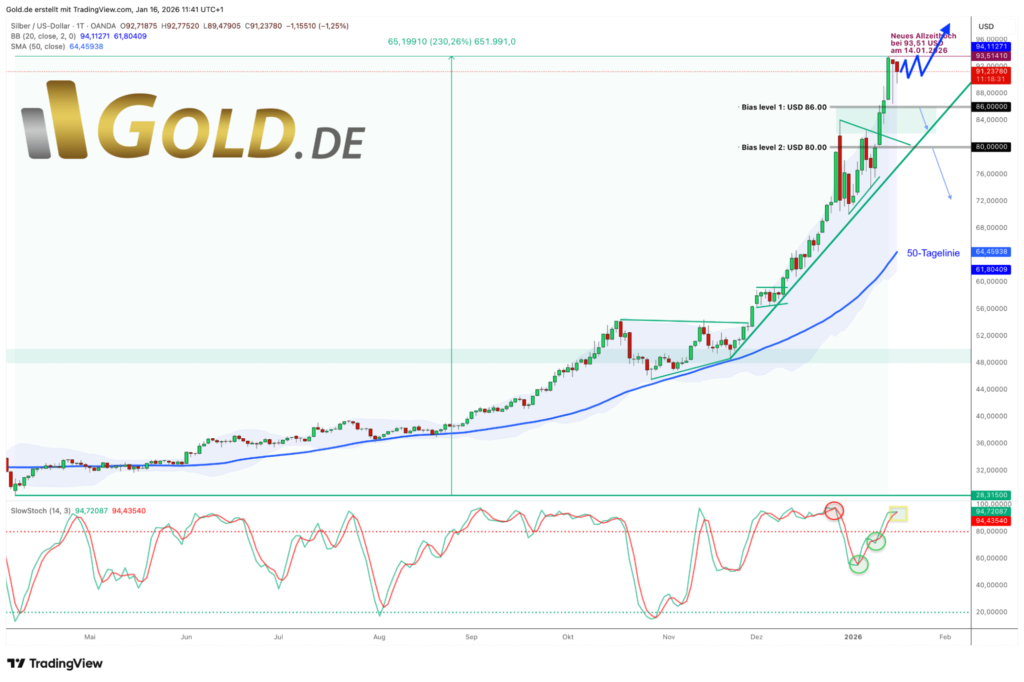
Then came today.

Silver crossed a line it had never crossed before.
Gold pressed against a number that would once have sounded absurd.
Platinum followed.
The miners stirred, late, as they always do.

The graph tells the story better than commentary ever could.

Not a spike.
Not panic.
Continuation.


Because this wasn’t a shock.

It was a catch-up.

Gold didn’t suddenly become valuable.
Silver didn’t suddenly matter.
They simply reached levels that matched a world that had been quietly changing for years.

Debt grew louder.
Trust grew thinner.
Promises multiplied faster than substance.

And through all of it, the metals didn’t negotiate.

They just stayed honest.


People will ask what happens next.

They always do.

But that question misunderstands the point.

This was never about a destination.
It was about orientation.

Gold isn’t a bet on disaster.
Silver isn’t a gamble on chaos.

They are references —
ways of knowing where you are when maps start being redrawn.

That’s what I learned, slowly, starting in 2005.

Not in theory.
In practice.


I didn’t become interested in gold because I wanted to leave the world.

I became interested in gold because I wanted to understand it
and eventually, to move through it without needing permission.

Today’s numbers matter.
But not for the reason most people think.

They matter because they tell you how long this has been underway.

And because, once you see that, you stop waiting for the pot to boil.

You read the currents.

And you keep rowing.

Schlobitten

I’ve always been extremely interested in World War 2 and the Eastern front, or Ostfronten as the Germans called it. Especially sad to me is the loss of German East Prussia, Pomerania and Silesia, along with the massive deaths, displacement and destruction wreaked during that final year of the war, 1945 and the further destruction that took place after. Much of which is barely covered in history books and seems destined to be lost to time forever soon.

One story in particular sticks in my mind, by Alexander Fürst zu Dohna-Schlobitten, who wrote his memoir of living in one such East Prussian castle upto 1945., Schlobitten. I’ve never personally visited the ruins that exist today, but he builds a picture of happiness, contentment and the general continuation of a life that had existed for hundreds, perhaps a thousand years or more, right up until the day he hears the sound of artillery fire from the east and concludes, rightly, that it may be time to go. He orders the house to be packed, the staff to prepare for exit and so begins the march West to escape. Turning briefly with sadness to face his childhood home and that of his ancestors before saying a silent and final goodbye.

The reason I write this is because this is how it rather feels regarding life in Europe generally. The front line has moved West since 1945 and it isn’t artillery that one physically hears in 2024, but a closing of digital prison walls. Walls and bars heralding the death of freedom, personal responsibility and basic rights such as owning your own productivity, bodily autonomy and being able to say what you think or feel about certain subjects.

In another time, we could’ve sat in our centrally heated homes comfortably, but fate has chosen that we must either face the enemy or flee and like Alexander there, in Schlobitten, with resigned sadness I really don’t see that it’s possible to face the enemy and win.

I choose freedom. After all, “He who runs away, lives to fight another day”, right?

Now, you may be wondering where the Gold or Silver connection is. There isn’t one, although I am sure Alexander had financially prepared for this eventuality by placing savings well outside of the crisis and was probably also carrying a supply of gold and silver coins for any eventualities, this post is all about the freedom part of the trio. Perhaps freedom is the most important of all?

The Four Horsemen of the Apocalypse

It completely missed my attention, and would have remained so had I not reinstalled Instagram on my mobile (#BlueTweedJacket), that the seals are now opened and the four horsemen of the apocalypse have, quite possibly, been released. Bear with me.

It all leads back to a very strange story that occurred on 24/04/2024 in the City of London, when 4 military horses were seemingly startled by some kind of building noise in Belgravia (Gematria : “Rise of the Phoenix”, remember this Economist cover from 1988?

“behold, a pale horse and his name that sat upon him was death..”

You can read about the horses here and work out the imagery for yourself. The key part for me is how the four horses ran through the City of London, much to the amazement of onlookers. Thus it was announced. I wonder if the names Vida, Trojan, Quaker and Tennyson could be signs in some way too?

For the uninitiated, the City of London is a separate country within the UK, explaining the bizarre yearly ceremony where the Monarch has to ask permission from the Lord Mayor of London to enter the City of London. I am unsure if fakey Prince Charley has done it yet, perhaps the City would say no, knowing he’s not really King. Seemingly, anyway, this all happened as the result of magically generating the finance for royalty to win their wars and the power of the City grew, to the extent that Corporations inside the city have votes, like citizens do, not that are many left within the old Roman city walls. A population decline that began with a Great Fire, way back in 1666. Oh wait a sec, 24/04/2024 (2+4)(4+2)(2+4)…666 again? After clearing the lower-grade humans away from inside the city, it went on to gain prominence in controlling world finance and the world of corpus-rations, or dead entities. You could even argue it controls the USA through the Eurodollar market, allowing it to manage and use the world reserve currency for it’s own purposes, exactly as it did with the British Pound, prior to 1926.

I can see the pieces linking together, Winston Churchill, as Chancellor of the Exchequer back in 1926 unrelentingly demanded a strong pound after the inflationary costs of The Great War, causing a general strike and leaving many coal miners without income and starving (I sense my own ancestors suffered too), which thanks the Lords of Finance book, explains how this led to a trans-Atlantic trade of Gold flowing across to the USA after WW1 and ultimately left the USA atop the world in 1945. Compare that to the closely-comparable current flow of gold from Europe and North America to Asia, or the new Switzerland of the East, Singapore. Got to wonder why he did it, eh? Or maybe, got to wonder who he did it for.

Match that with “You will own nothing and be happy” mantra of the World Economic Forum. Many of us are meant to die, especially the unproductive ones (by their measurements, let’s just ignore that not everything that can be counted, counts) and those that survive are meant to have every part of their lives tracked and controlled. I’m not joking, Denmark already has 95% of the population signed up to a Digital ID that includes a contract clause for allowing the bank, local government, any government agency (think : the health dept says you didn´t get the latest booster of the COVID-25 vaccine) and anyone else to basically lock your ID. No paying for anything, no access to anything, no state healthcare, no car, no nothing. If you don’t believe me that it’s already weaponised, ask this guy here, who without yet being convicted of any crime took part in a trucker protest by lobbing some potatoes on the motorway and got locked out.

Now, what about the names of those horses? Well, the first one, it maps via Gematria to “Dollar Collapse”, then the next one is called Trojan. Aha, another clue perhaps? What is Gold still measured in, even today? The city people once thought was a myth, somehow managed to have a weight named after it, the Troy ounce, used to measure gold. The one solid money unit people have always known they can rely on when everything else falls apart. Any ideas on those two other names…? Well, Tennyson was a Victorian poet whose most famous poem line was “Theirs not to reason why, theirs but to do and die.“, about the Charge of The Light Brigade in the Crimean war, and I seem to recall something happening in Crimea right now again. Quaker, a religion or an Earthquake. It may become clearer later.

I think I see the financial future clearer now. When money dies, as it has just been anounced it will, then we all turn back to gold, even briefly as the one unit we can trust, then the system resets, just as it did in 1923 for Germany (and 1945-46, again, painfully) and how it always works out for every fiat currency that has ever existed, be it Pounds, Francs, Dollars, Livres, Pengo or Dollars. Those that don’t prepare at all, be it by holding gold, silver or even tinned food are destined to expire, or fight, in a Darwinian trial that the elite will enjoy watching unfold and are poised, ready to grab your assets on the cheap. Then they’ll offer you the solution to scarce expensive food, rationing implemented and managed via an app on your phone. Digital ID worldwide through the back door and their Central Bank Digital Currency (CBDC), with all the controls they wanted all along.

Platinum, the Jim Rogers View

Investing in platinum and palladium, according to Jim Rogers, is akin to uncovering hidden treasures in the commodities market—both metals bear unique characteristics and play pivotal roles in industrial applications, presenting intriguing investment opportunities for the astute investor.

Platinum: The Precious Metal with Industrial Might

“Platinum wears the dual crown of luxury and utility,” Rogers might opine. He recognizes platinum’s status as a prestigious precious metal, often associated with high-end jewelry and automotive catalysts. However, he would highlight its critical role in industries like automobile manufacturing, emphasizing its scarcity and indispensability in catalytic converters for cleaner emissions.

Palladium: The Unsung Hero of Industrial Demand

Rogers might describe palladium as the silent workhorse of the metals market. He’d underscore its dominance in the automotive sector, particularly in gasoline-powered vehicle catalysts. “Palladium quietly powers the wheels of the automotive world,” he’d suggest, acknowledging its essential role in reducing harmful emissions.

Supply-Demand Dynamics

Supply-demand fundamentals are crucial to Rogers’ perspective on platinum and palladium. He might delve into the challenges of their production, highlighting the concentration of mining in specific geographic regions like South Africa and Russia. He’d likely emphasize that supply disruptions or geopolitical tensions in these regions can significantly impact prices due to limited global production.

Macro Trends and Price Volatility

Similar to his outlook on other commodities, Rogers might relate platinum and palladium’s price movements to broader economic trends. He’d emphasize their sensitivity to global economic conditions, industrial demand, and geopolitical factors. “Platinum and palladium ride the waves of economic cycles,” he’d note, acknowledging their susceptibility to market volatility.

Physical Metals vs. Mining Equities

Rogers might express a preference for physical ownership of platinum and palladium over investing in mining companies. He’d likely highlight the risks associated with mining stocks, including operational challenges, geopolitical uncertainties, and management decisions. “In these metals, owning the physical assets is akin to holding the crown jewels,” he’d suggest, emphasizing the tangible value of owning the metals themselves.

Long-Term Potential

Jim Rogers’ investment philosophy involves seeking long-term value, and he might view platinum and palladium through a similar lens. He’d likely advocate for these metals as potential hedges against inflation and a part of a diversified investment portfolio, emphasizing their enduring industrial significance and scarcity.

In essence, Jim Rogers’ perspective on platinum and palladium investing underscores their dual nature as precious metals with industrial importance. He sees them as integral components of the commodities market, presenting opportunities for investors who understand their unique dynamics and their roles in both luxury and industrial sectors.

Jim is most reknowned for his 1970s Quantum fund management with George Soros and more lately, his move to Singapore. He seems to have a knack for knowing when to buy low and sell high and freely shares his insights via interviews and Books.

Jim Rogers Talks about Silver

After so much success with his gold views, I asked ChatGPT what Jim’s views on silver are and am very grateful to their information for us average investors…

Investing in silver, through the lens of an astute investor like Jim Rogers, is akin to navigating the uncharted waters of an economic adventure—fraught with volatility yet laden with opportunities for the discerning investor.

Silver as an Industrial and Precious Metal

“Silver is a hybrid, straddling the worlds of industry and investment,” Rogers might muse. He acknowledges silver’s dual role as both a precious metal and an industrial commodity, recognizing its diverse applications across various sectors, from electronics to solar panels. This industrial demand often shapes his views on its long-term value.

Supply and Demand Dynamics

Rogers keenly observes the supply-demand dynamics in the silver market. He might emphasize the growing demand for silver in emerging technologies, juxtaposed with the challenges in its production and supply. “Silver is a metal in the shadows of its golden sibling, yet indispensable in the modern world,” he’d likely comment, highlighting the potential scarcity in the face of rising demand.

Silver vs. Gold: A Comparative Perspective

Drawing parallels between silver and gold, Rogers might emphasize the volatility and potential upside of silver compared to its more illustrious counterpart. He acknowledges that silver tends to amplify the moves of gold, often outperforming it in bull markets but also bearing the brunt of downturns. “Silver is the wild cousin of gold,” he’d quip, alluding to its penchant for higher volatility.

The Role of Macro Trends

Rogers’ investment philosophy revolves around macroeconomic trends, and silver fits into this narrative. He might delve into the correlation between silver and broader economic trends, pointing out its sensitivity to inflation, currency devaluation, and geopolitical tensions. “Silver dances to the beat of macro rhythms,” he’d likely comment, underlining its responsiveness to global economic shifts.

Physical Silver vs. Silver Equities

Similar to his views on gold, Rogers might lean toward physical silver over investing in silver mining companies. He might express concerns about the operational risks, management decisions, and geopolitical uncertainties that mining companies face. “In silver, owning the metal is holding the ace,” he’d opine, emphasizing the tangible value of physical ownership.

A Long-Term Perspective

Jim Rogers’ investment horizon spans generations, and his views on silver echo this patience. He might advocate for holding silver as a long-term hedge against currency debasement and inflation, reiterating its role as a store of value through tumultuous economic cycles.

In essence, Jim Rogers’ take on silver investing reflects a nuanced understanding of its industrial significance, market volatility, and its potential as a hedge in a diversified investment portfolio. To him, silver isn’t just a metal; it’s a multifaceted asset poised to shine amid the complexities of global markets.

Jim is most reknowned for his 1970s Quantum fund management with George Soros and more lately, his move to Singapore. He seems to have a knack for knowing when to buy low and sell high and freely shares his insights via interviews and Books.

Investing in Cryptocurrencies

Investing in cryptocurrencies through platforms like Binance has emerged as a contemporary alternative to traditional investments like gold. The allure of crypto lies in its decentralized nature, potential for rapid growth, and its position at the forefront of technological innovation.

Binance, one of the leading cryptocurrency exchanges globally, offers a user-friendly interface and a diverse range of cryptocurrencies for investment. Unlike gold, which has historically been a store of value, cryptocurrencies such as Bitcoin and Ethereum operate on blockchain technology, providing transparency, security, and potential for significant returns on investment.

One of the key aspects of investing in crypto via Binance is the accessibility it offers. Investors can start with small amounts, enabling broader participation regardless of financial standing. Moreover, the 24/7 market availability allows for flexibility in trading, unlike the limited trading hours of traditional markets.

While gold has been a long-standing hedge against inflation and economic uncertainty, cryptocurrencies are increasingly being seen as a hedge against traditional market fluctuations. Some investors view crypto as a means to diversify their portfolios beyond traditional assets like gold, aiming to capture potential high-growth opportunities in a rapidly evolving digital landscape.

However, it’s essential to note that investing in cryptocurrencies comes with its own set of risks. The market’s volatility can lead to substantial price fluctuations within short periods, making it a high-risk, high-reward investment. Regulatory changes, security concerns, and market sentiment can also significantly impact crypto prices.

Ultimately, the decision to invest in cryptocurrencies via Binance as an alternative to gold depends on an individual’s risk tolerance, investment goals, and understanding of the market. It’s crucial to conduct thorough research, understand the technology behind cryptocurrencies, and consider seeking advice from financial experts before diving into this dynamic and evolving investment space.

Precious Metals Surge: Unveiling the Dynamics Behind Silver and Gold Rally, and the Impending Rise of Platinum

Introduction:

In recent times, the world has witnessed a remarkable surge in the prices of precious metals, particularly silver and gold. Investors and enthusiasts alike have been closely monitoring the factors contributing to this rally. As we explore the reasons behind the ascent of silver and gold, we will also delve into the potential for platinum to follow suit, given the unique dynamics surrounding its production.

The Silver Lining:

Silver, often referred to as “the poor man’s gold,” has experienced a surge in demand for several reasons. One primary factor is its dual role as both a precious metal and an industrial commodity. The increasing demand for silver in the electronics and solar industries has created a substantial market for this versatile metal. Additionally, the low interest rate environment and inflation concerns have propelled investors to seek refuge in tangible assets like silver.

Gold Glitters Amidst Economic Uncertainty:

Similarly, gold has maintained its status as a safe-haven asset, drawing investors seeking stability during times of economic uncertainty. The ongoing global challenges, including the COVID-19 pandemic and geopolitical tensions, have fueled the demand for gold as a store of value. Central banks’ continued monetary stimulus measures and the fear of inflation have further intensified gold’s appeal, driving its price to new heights.

Platinum’s Turn in the Spotlight:

Now, attention is shifting towards platinum as a potential beneficiary of the current market dynamics. Platinum is a crucial metal, widely used in the automotive industry, particularly in catalytic converters. The majority of the world’s platinum supply (over 70%) comes from South Africa and Russia. However, recent developments in South Africa, a major platinum producer, raise concerns about the metal’s future availability.

Power Struggles in South Africa:

South Africa, a key player in the global platinum market, faces challenges in its power supply infrastructure. The country’s electricity grid has been plagued by issues such as load shedding and an aging power infrastructure. Unreliable power supply not only disrupts mining operations but also affects the overall economic activity, potentially impacting platinum production.

Russia’s Role in Platinum Supply:

On the other hand, Russia, another significant contributor to the global platinum supply (around 10%), has maintained a relatively stable production environment. However, geopolitical uncertainties and international relations may impact future supplies. Investors are closely monitoring these geopolitical factors as they consider the potential impact on platinum prices.

Investor Outlook and Conclusion:

As silver and gold continue to shine amid economic uncertainties, platinum emerges as a compelling investment opportunity. The metal’s unique industrial applications, coupled with concerns over the reliability of power supply in South Africa, suggest a potential uptrend in platinum prices.

Investors are advised to stay vigilant and consider diversifying their portfolios to include precious metals like platinum. The evolving dynamics in South Africa and Russia, combined with the global economic landscape, could position platinum as the next metal to garner significant attention in the ever-changing world of commodities.

Handily enough, Bullionvault* also allows investment in Platinum. As does Revolut*.

Both businesses will remit a small portion of their fees to us, but this doesn’t affect the price for you and we do genuinely recommend them for good service and access to corners of the market often off-limits to smaller investors like us.

War, What is it Good For?

Absolutely nothing. If you believe the song by Edwin Starr, anyway. I disagree. Eisenhower warned in the 1950s about the military industrial complex in the USA and sadly, time has proved him right, with a gigantic industry going on that relies on conflicts occurring in faraway places. All under the modern excuses of protecting democracy, while, it may be noted, most of the action seems to occur in resource-rich countries like Afghanistan, Iraq, and Libya, but countries like Zimbabwe are left to collapse.

Take for example, the latest situation in Ukraine. When it comes down to it, it’s a conflict based on what media tells us is happening. Unless we actually have our own feet on the ground, or know someone there who can tell us better, then it may as well all be lies, exactly the same as Orson Welles and his radio dramatisation of War of the Worlds in 1938, that had Americans packing their bags and fleeing for the hills. However that might have saved them is unclear, but I’m wishing I knew someone in Ukraine or Russia border regions who could tell me what the fear level really is.

Initially, stock markets responded by marking down Russian shares, and they have declined markedly, by about 30% since October last year, suggesting the insiders were in the know, as per usual. The USA continued to rise until a couple of weeks ago, since when it has fallen markedly too, along with EU markets. It’s interesting that the UK has not joined in the falls, and it could be that a market containing lots of resource, oil and financial stocks may be resilient in the coming years. Last couple days though, things have changed, with marked rises in Russian stocks especially, but the US beginning to curve upwards again too. The conclusion must be that the insiders know World War 3 isn’t happening quite yet and just perhaps the USA has had a little bit of a bloody nose from a playground scrap against a more established player. In fact, the USA has quietly slunk away, defeated from a few scraps in recent years. They tried to start a coup in Venezuela, the world’s richest nation in oil reserves and failed, suggesting the decline of this cycle of their power is well and truly underway.

So, what do we learn from all this? Wars happen and mostly they are engineered by someone looking to profit in some way. It wouldn’t surprise me if Ukraine agrees a major arms deal with the USA in coming months, to help defend against the Russian “threat” and the military industrial complex continues to profit from human misery and fear. As an outsider, with no hope of knowing when the next conflict incident is planned, My reading of this is : buy Russia, they really have it all, the resources and tons of under-used agricultural land that once supplied the world and just perhaps, buy the UK. People are still convinced Brexit was a bad idea, but the performance of UK stocks and funds suggests they have missed out on ten years of very good rises. Perhaps they missed that Royal Dutch Shell decided the EU is such a bad place to be, they dropped the Dutch after over 100 years and moved their head office to the UK in December 2021. It goes back to thinking before that resource stocks and banks may well be the right places to be for the next ten years. I am in no way saying that it’s going to be a great ten years for people living in the UK. “We are on a train journey, and some of the people on the train at the beginning are not going to be there at the end”, as I was once told by my employer during a meeting where mass redundancy was clearly planned. With coming rises in food prices, living in a country that must import over half it’s food and can easily be blockaded by uncooperative neighbours might not be a picnic. However, resource companies with their HQ there, but most of the earnings coming from elsewhere in the world, may well be a great place to be for your hard-earned savings. Along with…choke…big pharma. Reminds me of another war going on right under our noses that few are even aware of, the war on humanity itself.

When Money Changes

Global financial systems tend to last around fifty years, before dying and being replaced by something new. Normally in both a mix of managed and big bang, if that makes sense. Certainly, this is what happened in the late 1960s, leading to the USA closing the Gold window in 1971 and ending the convertibility of US Dollars to Gold at the fixed price of $35 an ounce. What a significant year 1971 was, for personal reasons too.

How Ironic he interrupted Bonanza to make an announcement about gold…

1980 was also significant, being the year it took $850 to exchange for one ounce of Gold. Yes, a twenty-times increase in nine years, for purchasing something and hiding it under the floorboards for the whole time. Sounds great, doesn’t it? And so it probably was, for those in the know, who had the opportunity to prepare early before the masses panic and pile in.

So, knowing that global financial systems change approximately every fifty years, we should be able to work out another monetary switch took place in 1921. This one wasn’t so clear, but it most certainly did.

Prior to world war one, the world largely operated on a gold standard, where prices were relatively fixed, or even falling with productivity improvements and living standards were rising. La Belle Epoque, as the French called it. A high point of human civilisation, that must have seemed at the time as if it would go on forever. Many in 1914 declared war too impossible to take place, as the world had become so intertwined and living standards had risen so high, only fools would want to destroy such a perfect world. Well, with the benefits of hindsight, perhaps not fools, but most definitely those with darker intentions and few scruples about the natural universal laws.

Naturally, wars are expensive, both in human and financial capital. Governments issued new bonds and demanded patriotism of their citizens, both in sacrificing their lives and investing their funds in pathetic investments that over the long term were guaranteed to dilute their purchasing power. Interestingly, when I first followed financial markets in the 1980s, £100 war loan bonds were still trading in the UK, but with a terrible yield of perhaps, 3% and trading for around £40. Imagine what £100 could buy in 1940, versus what it could buy in 1990. As usual, the deal with government is a one-sided one and in this respect, nothing has changed for the better in one hundred years, but got markedly worse. By 1918, all sides were experiencing inflation (definition : increasing number of currency units chasing same quantity of goods) for the first time in generations and as the war ended, there was a chance that if the economies of the nations returned to anything like pre-war normal and soldiers spent the dormant earnings of the past years, inflation could’ve occurred massively. Also, there was a big question around gold no longer being able to back the number of currency units now in existence. Over the coming years, gold coins were quietly withdrawn from general circulation and replaced with pieces of paper promising the same thing, but now buying much, much less when it came to exchanges. The wisest members of the public surely kept a few gold sovereigns, if they had them, in the drawer for a rainy day. How interesting then, that a serious pandemic – Spanish Flu – came along for and semi-shut down these economies, causing large-scale unemployment and distortions for around two years.

Let’s compare it to now. In 2008, a great financial war began. One where if the natural laws were followed, the banks would’ve collapsed. Instead, they were put on life support at multi-trillion cost to the citizens of those countries affected. The war quietly continued for 11 years, with various actors and players of roles appearing to assuage and distract the public in the style of master magicians, watch what this hand is doing, don’t look at the other hand. It’s largely worked, unfortunately and people have been tricked, while the banks have recapitalised, made billions and are now perhaps good long-term investments for the next ten years, while they unscrupulously build large property portfolios of repossessed properties to be rented back to the dispossessed. In September 2019, the financial world creaked when interest rates on the repo market (short term overnight lending between businesses) spiked and everyone stopped lending to each other. All in one night. It’s very hard to find details on this, since the media completely failed to report it at the time, but the US Federal reserve began pumping billions nightly in to keep that market functioning, before Corona conveniently appeared and shutdown the world, just as Spanish flu did one hundred years ago.

I make no judgement on whether these pandemics are real or not. Only their mirrored effects in creating similar situations in the world. On this basis, they have been near-identical, so now for a prediction – Spanish flu, the mostly appalling misnamed illness of all time, considering the first case was reported in a Kansas military camp, began in 1918 and swept across the world in two years, dying out around 1920. From there, there was economic hardship and a stock market collapse during the period 1921-23, along with gigantic hyperinflation in Germany, which I covered in my book. After that, famously, the stock markets began a dramatic rise, peaking in 1929 and not finding their nadir until 1932. Perhaps the idea of a rhyming, roaring twenties is not yet done? Let’s imagine this scenario – Corona came in 2020 and perhaps Moronic Omicron is the one that dampens it down and things reopen after two years. Then economies readjust over the next few years with a destruction of money in the old system, before the new system is established. One thing is for sure, unless you are an insider, and I am clearly not, we need to retain our wits about us to survive and, just perhaps, prosper. Good luck!

As an aside, it fascinates me that the war ended on 11/11/18. An interesting date in itself. One that cleverly works worldwide, regardless of how you arrange the days and months, a bit like 6/6/44, or 7/7/05 – feel free to look those up if you are requiring historical insight. Few know that the war began on 111118 too. Oh wait no, I hear you say, it began in August 1914, when Archduke Ferdinand was amateurly assasinated by Gavrilov Princip in Belgrade, an assassination attempt so botched the driver had to help it happen. No, it began on 111118, as that was the number plate of the car the Archduke was on. 118 and gematria, you really can’t make this stuff up. Wake up and see the signs.

« Older posts

© 2026 InvestGold

Theme by Anders NorénUp ↑